By
CultX Team



Buying fine wine has always involved a certain amount of legwork. Finding the bottle is one thing. Working out whether the price is right, checking its history, comparing vintages, looking at critic scores, finding somewhere to store it and understanding whether there is a market when you eventually want to sell can turn one purchase into an afternoon of research.
For people who know the market well, that process becomes second nature. For everyone else, it can make fine wine feel more complicated than it needs to be. The interesting thing is that many of these problems are not new. The technology has changed dramatically, the market has become more international, and today's buyers have far more information at their fingertips, but the basic challenge remains surprisingly familiar. How do you bring the wines, the buyers, the sellers and the information needed to make a decision together in one place?
Back in 2001, Phil Gearing, now Chairman of Cult Wines, launched Financial Wines. The idea now sounds straightforward: show people that several suppliers might be selling the same wine at several different prices, then let them compare them. At the time, even that was considered complicated.
Phil recalls seeing average price spreads of around 25% and sometimes considerably more. Simply giving buyers visibility of those differences addressed a very real problem. Yet feedback suggested that some wine buyers still found the concept too complex.
A quarter of a century later, the audience is different. Fine wine buyers span a much wider age range. They are accustomed to researching purchases online, checking prices instantly and managing everything from investments to travel from a phone. Expectations around transparency have changed with them.
The wine market has changed too. There are merchants, brokers, auction houses, exchanges, private collectors and professional sellers, often holding or seeking exactly the same wines. There is far more market information available than there was in 2001, but it can still sit in different places. Joe Alim, Managing Director, Cult Wines Asia, describes the result neatly as "tab fatigue". One screen for prices, another for critic scores, another for trading information, then several more while you work out what is actually available. More information does not automatically make something easier. The next stage is bringing it together.
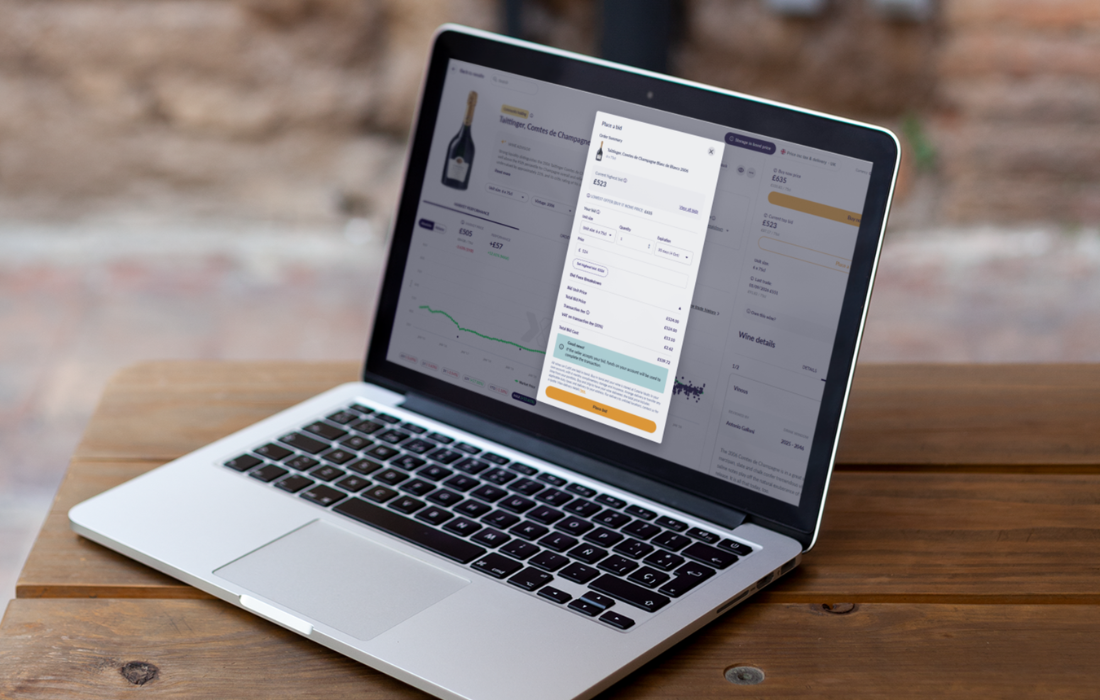
That has been one of the ideas behind CultX from the beginning. Today, more than 50,000 wines have full trade data history on the platform, while more than 10,000 wines are available to buy. Users can research wines, compare pricing, look through previous trades, check scores and drinking windows, place bids, as well as make offers and manage wines they already own.
The aim is not to turn every collector into a professional wine trader. Quite the opposite. Someone who enjoys analysing markets can dig deeply into the numbers. Someone building a cellar for drinking might care far more about maturity, critic scores and which bottles are entering their drinking window. Another buyer may simply know that they want a particular producer and vintage and would like a sensible way to find it at the right price. The same information can serve very different people.
That matters because wine buying is personal. One collector may spend months researching every addition. Another simply wants six bottles for dinners over the next few years. A restaurant wine director has a completely different set of priorities again. There should not need to be a different market for each of them.

The bigger challenge today is no longer discovering that different prices exist. It is liquidity.
Fine wine trades across a collection of individual markets. Stock sits with merchants, collectors, investors, brokers, exchanges and other professional sellers. Buyers are spread across those same channels. Each can work perfectly well on its own. The difficulty comes when somebody wants to sell a wine and the natural buyer happens to be somewhere else.
Tom Gearing, CEO and Co-Founder of Cult Wines describes the objective very simply: bring more of those buyers, sellers and pools of liquidity together. The more of the market that can be seen in one place, the easier it becomes to understand what a wine is actually worth, where buyers are bidding and where sellers are prepared to transact.
That creates a useful shift in the way people can approach a purchase. A price is more meaningful when you can see the market around it. At the moment, CultX has more than £10 million ($13 million) of live offers and £6.4 million ($8.5 million) of live bids. Behind those live markets sits trading history across more than 50,000 wines. For a buyer, that provides context before making a decision. For a seller, it gives a clearer view of where demand sits. And for the wider market, bringing more trading activity together should make pricing easier to understand.
This becomes particularly important when prices are moving. Cult Wines’ recent article on Michael Burry's move into fine wine made an interesting point. Burry reportedly looked at around 700 wines this year and bought only about 40. That means he rejected well over 90% of what he considered.
Whatever your view of his broader investment thesis, that level of selectivity says something useful about fine wine. There is no single "fine wine market" in which every bottle moves together. Different producers, vintages, formats and regions can behave very differently. A famous name does not automatically make a wine good value. A wine falling in price does not automatically make it cheap. Two vintages from the same château can have completely different supply, maturity, critical reception and trading histories.
That makes access to information particularly valuable after the correction the market has experienced since 2022. Our H1 2026 analysis looked at 52,147 wines and found that the broad market was essentially flat during the first half, while trading activity and several measures of liquidity improved. The recovery, where it is appearing, remains selective rather than universal.
For collectors, that creates interesting buying opportunities. For investors, it makes research even more important. For both, having more of the market visible helps.
The United States is a natural place for CultX to expand, but not simply because it is a large market. It is already our second-largest market, with more than 550 Americans using CultX. We currently deliver to 33 states, with wines travelling from London cellar to US door in as little as two to three weeks.
More interesting is the type of buyer we are seeing. One in six US collectors is under 35, while three in 10 are millennials. That points towards a generation of wine buyers who are comfortable researching for themselves, comparing options and using digital tools to manage purchases.
There is also a strong culture of actually taking possession of wine. Jonathan Stevenson, EVP of Cult Wines North America, who previously led our New York office, talks about the importance of that physical connection. Many American collectors want bottles in their own cellar. They want to buy wine, follow it, open it and share it. That makes delivery especially important.
Historically, accessing stock held in the UK bonded market from the United States could involve several separate steps. Finding the wine was only the beginning. Shipping, duties, taxes and logistics then had to be considered before the bottle reached its final destination. Making that journey simpler changes the proposition.
A collector in New York, California or Florida can browse a much wider pool of wines held within the international fine wine market, compare the price for delivery, buy through the platform and arrange for those bottles to come to them. For someone who prefers to keep wine in bond, the option remains there too. It is about giving the buyer the choice.
That is why the CultX move into the United States is interesting beyond America itself. It reflects what fine wine is becoming.
Wine has always travelled. Bordeaux, Burgundy, Champagne, Tuscany and Napa have collectors thousands of miles from the vineyards themselves. Yet the secondary market around those wines has often remained surprisingly regional. Technology is gradually changing that.
A seller in one country can find a buyer in another. A collector can research a bottle they have never previously owned, look at its trading history and compare it with other vintages within minutes. Someone discovering fine wine for the first time can have access to information that once belonged largely to merchants and professionals.
CultX now has more than 10,000 wines available to buy, with millions of dollars of live bids and offers sitting behind them. That scale is useful, but the bigger goal is simple. Fine wine becomes a better market when it is easier to see.
More wines. More buyers. More sellers. Better information. Clearer pricing. Straightforward ways to buy, store, sell or take delivery.
Twenty-five years ago, showing somebody that the same bottle could be available from ten sellers at ten different prices felt radical. Today, buyers expect more. They want to know what people have actually paid. They want to see what somebody is bidding now. They want the history of the wine, its scores and its market performance. They want to know they can sell it again. And, sometimes, they simply want to get the bottle home, open it and enjoy it.
The wine has not changed. The market around it has. And it is still only getting started.
Past performance is not a guide to future returns. The value of wine investments can rise or fall. This analysis is provided for informational purposes and does not constitute personalised investment advice. Wines referenced may not be available for purchase on the CultX marketplace at all times.

Discover Lafite Rothschild 2019: Perfect scores, high liquidity, undervalued with significant appreciation potential — this is a stellar investment. Start trading today with CultX.
Read more ➜
Analysis across 30 vintages, combining critic scores, trade data, and pricing trends to highlight investment opportunities in the secondary fine wine market.
Read more ➜
An analysis from The Top Wines of 2025 report using 36,526 executed trades across 9,902 wines to reveal liquidity shifts in the 2025 secondary market.
Read more ➜