By
CultX Team


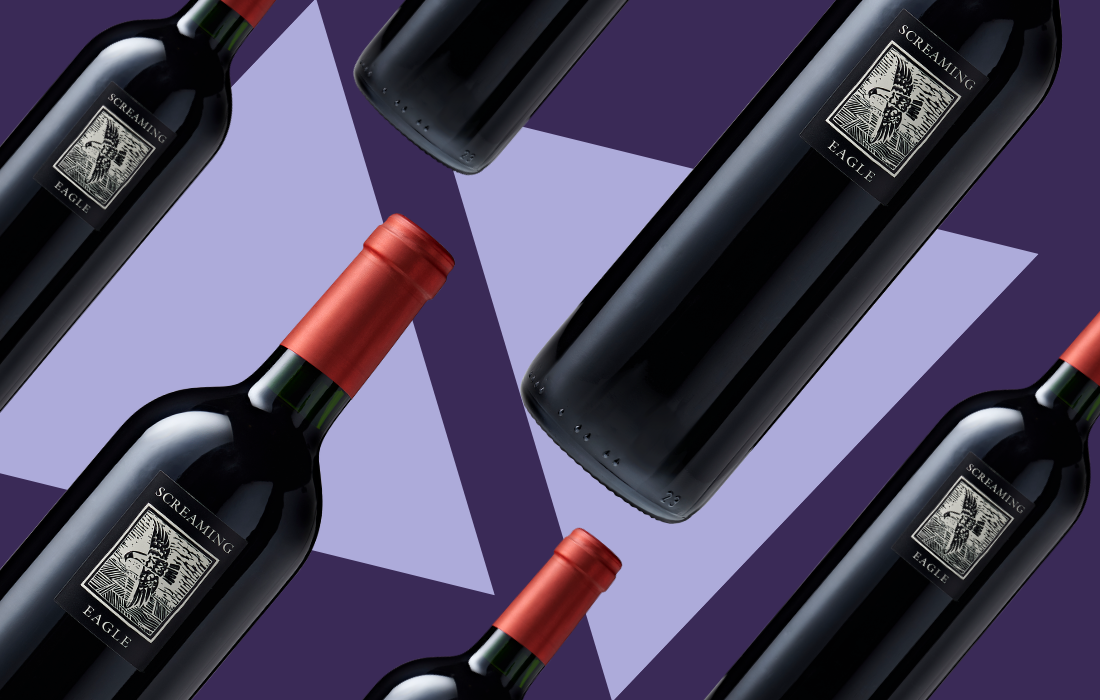
Screaming Eagle is the wine that broke the market before most collectors had heard of Napa Valley. At the 2000 Napa Valley Charity Auction, a single six-litre bottle of the 1992 vintage sold for $500,000, a record that stood as the most expensive wine ever sold at auction until it was surpassed by a bottle of Romanée-Conti. The myth has been so thoroughly constructed over thirty years, the waiting list, the silence, the locked gates, the Oakville benchland address, that serious investors sometimes forget to ask the basic question: is the pricing actually right?
Right now, across the thirty vintages listed on CultX from 1992 to 2022, the answer in several cases is no. The correction that has swept through trophy wine since 2023 has hit Screaming Eagle hard, and the trade data tells a more nuanced story than the listed market prices suggest. The dual-100-point 2016's last cleared transaction was £6,250 for a 3x75cl, implying £2,083 per bottle, down from a peak trade price of £9,100 (£3,033 per bottle in Feb 2022. The 2019 Screaming Eagle vintage is showing genuine buying activity in recent months, with four trades clearing in March 2026 alone at just over £2,000 per bottle. But after a significant market correction, is there value to be found in this iconic Cult wine?
The basics matter here because Screaming Eagle's scarcity is structural, not manufactured.
The estate sits on 57 acres of prime Oakville benchland in Napa Valley. Jean Phillips, a former Napa Valley real estate agent, purchased the property in 1986 and spent the first few years selling the fruit to other wineries in the region. It was on the advice of Robert Mondavi that she made the leap from grower to producer, hiring Heidi Peterson Barrett as founding winemaker and releasing the debut vintage from the 1992 harvest. That wine was not released until 1995, at which point Robert Parker awarded it 99 points, immediately establishing Screaming Eagle as the defining Napa cult wine. The score, combined with Barrett's consistent work across the following decade, is what built the waiting list that still runs to years today.
In 2006, Stan Kroenke and Charles Banks acquired the estate from Phillips for a sum widely reported at around $30 million. Banks departed in 2009, leaving Kroenke as sole proprietor, a position he has held since. The philosophy of extreme quality and extreme scarcity has remained unchanged throughout his ownership. Andy Erickson took over winemaking duties following the ownership transition, before Nick Gislason assumed the role in 2011 at the age of 29, having previously trained at Harlan Estate in Napa and Craggy Range in New Zealand. Gislason remains the winemaker today.
Production has never been meaningfully scaled. Depending on the vintage, between 500 and 850 cases are produced annually. The wine is predominantly Cabernet Sauvignon, typically 75% to 87% of the blend, with Merlot and Cabernet Franc making up the remainder, aged approximately twenty months in new French oak. The waiting list for direct allocation runs to years.

Across the full range from 1992 to 2022, Screaming Eagle has accumulated a scoring record that genuinely warrants the superlatives surrounding it.
Three vintages carry a 100 point score from Robert Parker: 2010, 2012, and 1997. Lisa Perrotti-Brown awarded WA 100 to the 2007, 2015, 2016, and 2018. Galloni at Vinous has given 100 to the 2016, 2019, and 2021. Parker's 99 covers 2001 and the inaugural 1992 vintage. Galloni's 100 for the 2001 via Vinous and his 98+ notes on the 2002, 2009, 2012, 2013, and 2015 create a consistent picture of a producer operating at or near the ceiling of what Napa Cabernet can achieve.
What is less discussed is the divergence. Parker and Galloni have often rated these wines differently, not by a point or two but by gaps that move prices materially in the secondary market. The 2011 is the starkest case: Parker gave it 92.5, Galloni rates it 98 at Vinous. The 2009 shows the same pattern differently: Parker 96, Galloni 98. When Parker and Galloni agree, the 2014 at 97/97, the 2015 at 100/98, the 2016 at 100/100 the market prices efficiently. When they diverge, that is where this analysis finds its most interesting questions.
Every vintage on CultX is listed in multiple pack sizes: the 6x75cl standard, the 3x75cl half-case, and in the case of the 2017, a 12x75cl magnum format (The Flight). The overwhelming majority of actual secondary market transactions on Screaming Eagle clear in 3x75cl format. This matters enormously for reading the data correctly.
The 2022 vintage of Screaming Eagle is the most actively traded vintage in the range, with 15 transactions in the past year, all 3x75cl.
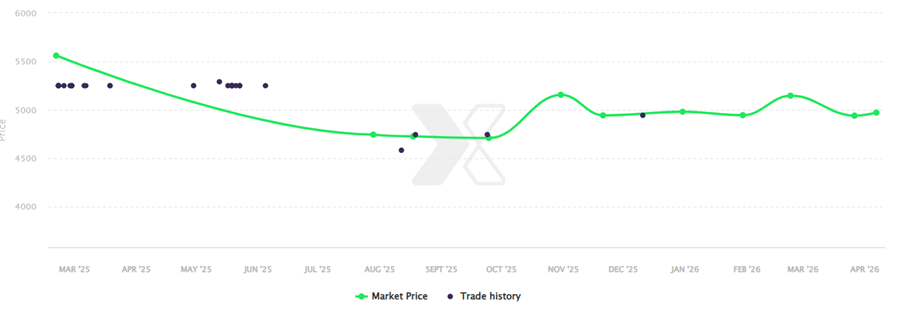
The price trajectory tells a clear story: trades cleared at £5,250 per 3-pack consistently through May 2025 (implying £1,750/bottle), stepped down to £4,580-£4,742 through August-September, and then partially recovered to £4,941 by December 2025 (£1,647/bottle). The +4.94% one-year market price performance conceals a price that actually fell and then partially recovered within the year, and the December clearing price implies a per-bottle figure below the current 6x75cl listed market price.
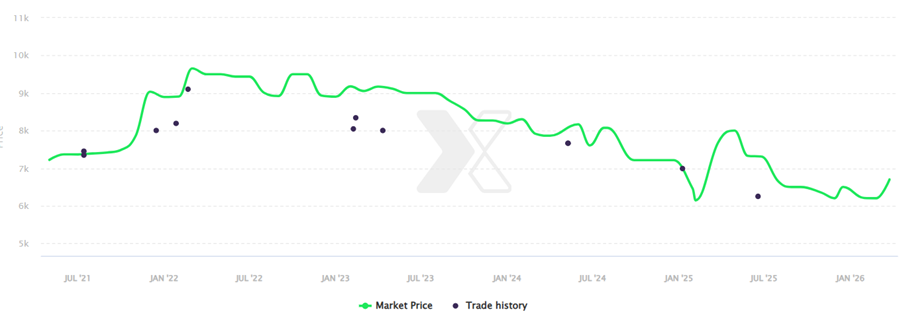
The 2016 vintage of Screaming Eagle is dramatically different. One trade in the past year: June 2025 at £6,250 per 3-pack (£2,083/bottle). Before that, January 2025 at £7,000 (£2,333/bottle), May 2024 at £7,665 (£2,555/bottle), and the peak of £9,100 (£3,033/bottle) in February 2022. The listed market price of £13,400/6x75cl implies £2,233/bottle, but the last actual cleared transaction was at £2,083. The 2016 market price is currently above where buyers have been willing to trade. That is not a reason to avoid it; it is a reason to bid below the ask in the current market conditions, where it has been a buyer’s market. This may well change as we see the fine wine market stabilise through 2026.
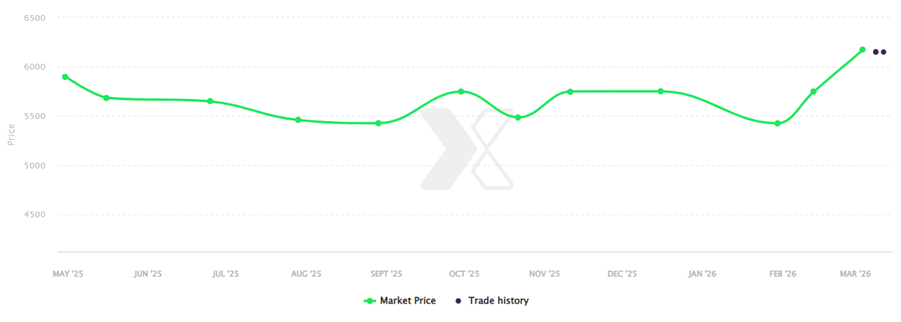
The 2019 vintage of Screaming Eagle has only 5 trades visible in total, 4 of them in March 2026, all at £6,150 per 3-pack (£2,050/bottle). The March clustering is unusual and suggests a single motivated seller clearing inventory. The 2025-03-04 trade at £6,185 was the only other recorded transaction. This is not a liquid market by any conventional standard, but those March 2026 transactions represent the most recent price discovery available on the 2019 - and they cleared at essentially the current market price, which is more than can be said for the 2016.
The 2021 vintage of Screaming Eagle has never cleared a transaction on CultX. The market price of £22,518/12x75cl (£1,877/bottle) reflects a price at which sellers are willing to list, with no buyers yet willing to clear. For a patient investor comfortable setting bids at their own price, that absence of trading history is an opportunity. The 2021 is the wine where the bid side has the most power.
The 2011 vintage of Screaming Eagle last traded in July 2021 at £7,250 per 3-pack (£2,417/bottle). Nothing since. The current market price of £11,000/6x75cl implies £1,833/bottle, which is actually below the last cleared transaction price. In nearly four years of no trades, the market price has drifted down while the wine has continued to age toward Galloni's 2021-2041 drinking window. Those who bought in 2020-2021 at the £6,000-£7,000 range per 3-pack are sitting on a wine that the market has essentially abandoned.
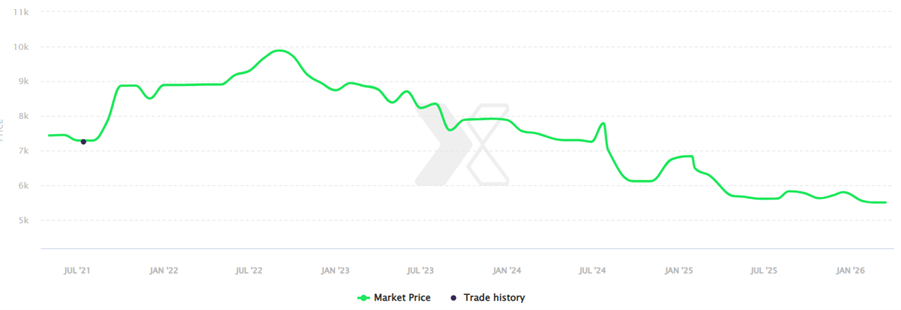
The 2019 vintage of Screaming Eagle is the first place anyone buying Screaming Eagle today should look.
Galloni's 100-point note describes "mind-blowing elegance and finesse that stand apart from the generally more potent style of so many wines in this vintage." The drinking window runs 2029 to 2049. Four trades cleared in March 2026 at £6,150 per 3-pack - the market is engaging with this wine right now, not last year. The 6-month price appreciation of +12.54% is real and is confirmed by those cleared transactions. At £2,058 per bottle, the 2019 is cheaper than the 2016 (WA 100 / Vinous 100) despite an identical Galloni score and a window three years shorter at the opening end but not meaningfully different at its ceiling. The 2019 is the only vintage across the range with active secondary market buying momentum and cleared transactions in 2026. That combination of quality, momentum, and liquidity evidence, makes it the anchor position.
The 2016 vintage of Screaming Eagle demands a separate treatment, because the trade history changes the picture meaningfully. The dual-100-point vintage, Perrotti-Brown and Galloni, the only such combination in Screaming Eagle's history, last cleared at £6,250 per 3-pack in June 2025. The market price of £2,233/bottle is above that clearing level. Galloni himself says he "wouldn't dream of touching a bottle anytime soon", the window opens 2026, which means we are just arriving at drinkability on the most recently available bottles. For a collector who actually opens wine, the 2016 is just entering its first phase of drinking. For an investor, the single trade in twelve months tells you this is a market where sellers outnumber buyers. It also reflects the extreme scarcity of OWC 3 bottle cases of this wine, let alone for a vintage regarded as one of the greats. The right approach is to set bids below the market price and wait. At £2,083/bottle or below, the last cleared price, the 2016 represents one of the finest risk/reward positions in the entire Screaming Eagle range.
The 2018 vintage of Screaming Eagle carries WA 100 from Perrotti-Brown and Vinous 98 from Galloni. Drinking window 2025-2065. The wine last traded at £6,800 in September, this equates to £2,267 per bottle. This is a wine that is opening its window right now and carries near-identical credentials to the 2016. At equivalent price levels, the 2018 offers a longer active drinking horizon.
The 2021 vintage of Screaming Eagle is the most unusual proposition in the range. Galloni 100, drinking window 2029-2046, zero cleared transactions, market price £1,877/bottle. The -27.45% MAX return is purely a function of the elevated release price into a market that subsequently corrected. The price chart shows steady recovery from the January 2025 trough, up 4.47% over one year, but the absence of any actual trades means that recovery is notional. The reality is, this is one of the more affordable vintages on the market, and whilst Galloni believed this to be “one of the most brooding, explosive young wines I have ever tasted here” he also admits “the 2021 really does need time”. That is either an opportunity or a warning, depending on your time horizon. For a five-to-ten-year hold, it looks like the former.
The 2022 vintage of Screaming Eagle is worth addressing directly, because the trade data reframes the listed price significantly. Fifteen trades in the past year, all 3x75cl, with prices stepping down from £5,250 (February-June 2025) to £4,941 (December 2025). The December clearing at £4,941 per 3-pack implies £1,647/bottle, below the listed 6x75cl market price. The Galloni 95 with a 2027-2042 window positions this as a fine but not exceptional vintage. It is however, the lowest priced vintage available right now and at less than £5k per 3-pack in bond, it does represent a relatively compelling entry point for a brand, which only a few years ago you would have snapped off people’s hands to access at ~£1,500 per bottle.
With peak supply on the market, and some collectors on the mailing list, willing to let go and re-sell in current conditions, for a savvy buyer, aggressive bidding could land an attractive purchase price.
Nothing in the range is more analytically interesting than the 2011, and the trade data makes it both more interesting and more cautionary than it might initially appear.
Parker scored it 92.5, reasonable for a challenging California vintage. Galloni scored it 98 at Vinous, calling it a wine he has loved "since it was in barrel." A 5.5-point gap. The market has followed Parker: the 2011 sits at £1,833/bottle, the lowest of any modern-era vintage with meaningful critical coverage, CultX normalised score 90.
But the last cleared transaction, July 2021 at £7,250 per 3-pack, implying £2,417/bottle is significantly above the current market price. Someone four years ago was prepared to pay £2,417/bottle for this wine, and the market price has since drifted below that level to £1,833.33 despite the wine continuing to age toward the centre of Galloni's 2021-2041 window.
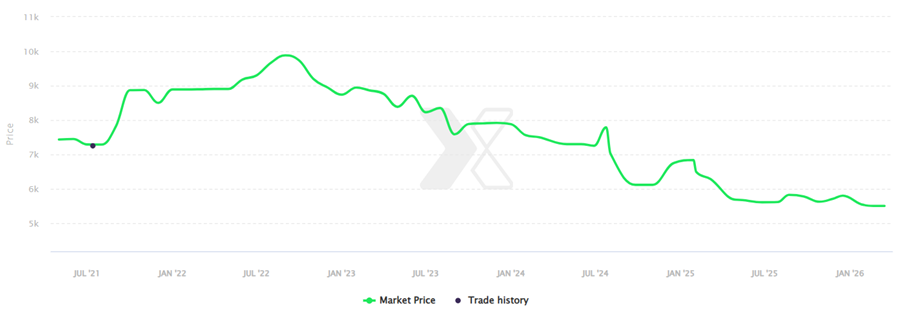
There has been no trade since. That four-year absence cuts two ways: it could mean buyers who previously engaged have lost conviction, or it could mean no motivated seller has come to market and the price discovery that did occur has simply stalled. The chart shows a wine that ran from £5,000/6-pack in 2012 up to the mid-teens during the pandemic boom and has corrected to the low teens, following the same pattern as the broader estate. The 2011 is a speculative position for investors who believe Galloni and are patient enough to wait for the market to find a new clearing level, or are happy to buy the dip, for a highly rated vintage from Galloni, that’s entering its peak drinking window and should effortlessly age for the next 10-20 years. At just £1,833 per bottle, it could be one of the more attractive older vintages to acquire.
The 2009 vintage of Screaming Eagle carries WA 96 (Parker) and Vinous 98 (Galloni), whose note explicitly links it to the 2007 as a stylistic sibling. Drinking window 2019-2038 from Galloni, meaning it is fully open and at its peak right now. At £2,100/bottle, it prices below several younger, lower-scoring vintages. No cleared transactions are visible in the accessible trade history, which means the market price is a seller's ask without a recent confirming trade. The 2009 is a fine wine at a reasonable price, hold if you own it, but verify recent clearing prices before acquiring.
The 2010 vintage of Screaming Eagle, Parker's "utter perfection" in a 610-case production, sits at £2,683/bottle, a meaningful premium over comparable-quality vintages. Galloni's 96 comes with a 2018-2030 window, suggesting the wine may already be past its Galloni-defined peak. Prime Napa Cabernet, especially from an estate like Screaming Eagle should mature effortlessly for another 10-20 years. The premium the market has assigned to the Parker 100 on this vintage has not historically translated into superior price performance.
The 2001 vintage of Screaming Eagle is the most compelling pre-2010 vintage in the range. WA 99 (Parker, 2015-2035), Vinous 100 (Galloni, 2021-2036). Fully open, drinking magnificently now, up 5.52% in one year. The 2001 is Screaming Eagle at its historical peak under Heidi Barrett's winemaking, the combination of that provenance, the dual critical conviction, and an active drinking window makes it one of the few older vintages with a coherent hold rationale. At £2,550/bottle, it sits above most of the modern era on price; whether that premium is justified depends on whether the buyer is collecting or investing.
The 2005 vintage of Screaming Eagle (WA 98, Vinous 94) is priced at £2,552/bottle , above the 2016 and 2018, both of which carry stronger combined critical scores, younger profiles, and longer windows. Parker's 2008-2033 window and Tanzer's 94 from Vinous tell a consistent story: this is a very good Screaming Eagle that is approaching its natural ceiling as an investment asset. The case for holding over the 2016 or 2018 is not there.
The 2006 vintage of Screaming Eagle is approaching its window close. Galloni gave it 98 when at Wine Advocate and again 98 when at Vinous, the same critic, the same score, the same wine, twice. The window runs to 2026. We are in it right now. Anyone holding the 2006 for investment should be selling into any bid strength; the appreciation potential from here is limited and the window is closing.
The 2007 vintage of Screaming Eagle is the vintage I find most puzzling from a pure data standpoint. Perrotti-Brown gave it WA 100 with a 2018-2047 window. Tanzer gave Vinous 96. At £2,287/bottle, down 31.41% in one year, the worst twelve-month performance of any vintage with visible trade data, the market has clearly decided this wine does not command the premium its score implies. The MAX return of only +28.04% since listing confirms that the LPB 100 has never fully translated into secondary market conviction. Watch, don't buy.
The 1992 to 2001 listings represent the historical archive of what Heidi Barrett built at Screaming Eagle. The 1992 at £14,583/bottle - the founding vintage, Barrett's first commercial release, the wine that received 99 from Parker and started everything - is priced as the museum piece it is. There is a single bottle of the 1992 owned by a member of the CultX community, so if you fancy owning a piece of history, then there could be a market to be made.
The 1997's £3,950/bottle reflects the Parker 100 that made Screaming Eagle globally known, but given the age, rarity, and current asking prices for these vintages mean these are collector assets, not necessarily liquid investment positions. But in recent times, we have seen how sometimes it can only take a couple of motivated buyers and perfect provenance to push a price sky high for these library years.
Let me be direct about where the risk/reward lies.
Strong Buy: The 2019. Active cleared transactions in March 2026. Galloni 100. Window 2029-2049. The only vintage in the range with visible buying momentum confirmed by actual trades. At £2,058/bottle, the pricing is consistent with the March clearing data. This is the benchmark position.
Buy: The 2016, on bid. The last cleared price was £6,250/3-pack (£2,083/bottle) in June 2025. The market price sits above that. Set bids at or below the last cleared level and be patient — with one trade in twelve months, there is no competing bid pressure. Dual WA/Vinous 100, window to 2065. The finest wine at this estate in the modern era, available below where the market was pricing it nine months ago.
Buy: The 2021, at your price. A Galloni 100 point vintage with a 20-year window. If your time horizon is five-plus years and you have the patience for current low liquidity, the 2021 offers the most asymmetric entry point in the range.
Speculative: The 2011. Galloni 98 priced at Parker 92.5 levels. The last cleared trade (July 2021) was above the current market price. No new trades in nearly four years. This is a binary bet on which critic is right about what is in the bottle. Position size accordingly.
The spread trade: The 2005 at £2,552/bottle against the 2016 at £2,233/bottle. One is a 98-point wine approaching the end of its investment life with a Parker-defined window closing in 2033. The other is a dual-100-point wine with a window to 2065. The £319/bottle premium to own the older, lower-scored, shorter-window wine over the defining vintage of the modern era is a pricing error. Rotate out of the 2005, into the 2016.
Exit: 2005 and 2006. Both are great wines. Neither justifies its price relative to the alternatives in the range. Sell into bids.
Screaming Eagle will remain one of the most recognised names in fine wine for as long as the allocation list is measured in years. The question is not the quality - it is never the quality - but whether the secondary market prices across thirty vintages reflect the actual differentials between them. Right now, in several important cases, they do not. The 2019 and 2021 are materially cheaper than the scores warrant relative to the older vintages. The 2016 is available below its last cleared transaction price. Furthermore, this is a brand that has suffered disproportionately during the market downturn over the past couple of years, but with a number of vintages offering attractive entry points at £1,500-£2,000 per bottle, for the patient investor, that is not a problem. It is the point.
All prices and trade data sourced from CultX as of April 2026. Trade history drawn from the CultX trade history panel, all unit sizes combined. Market prices quoted on a per-bottle equivalent basis, in-bond. Market prices for most vintages reflect listed asks rather than cleared transaction prices; where cleared transaction data is available, it is cited directly. This article is for informational purposes only and does not constitute financial, investment, or regulated advice. Fine wine values can fall as well as rise. Past performance is not a reliable indicator of future results. Always conduct your own research before making any investment decision.
Market analysis covering critic scores, pricing trends, and performance across 25 vintages. Identify undervalued opportunities and key investment insights within the Bordeaux market.
Read more ➜
With lower prices, renewed demand and improving market signals, 2026 is shaping up to be a standout year for collectors and investors.
Read more ➜
Discover Lafite Rothschild 2019: Perfect scores, high liquidity, undervalued with significant appreciation potential — this is a stellar investment. Start trading today with CultX.
Read more ➜