By
CultX Team


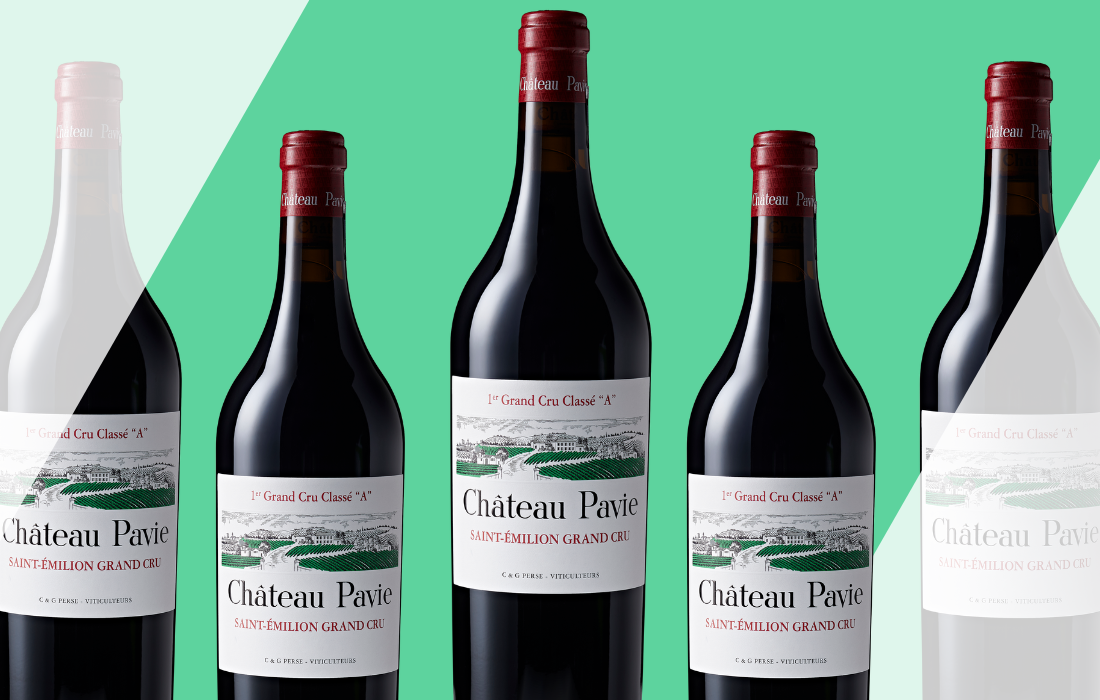
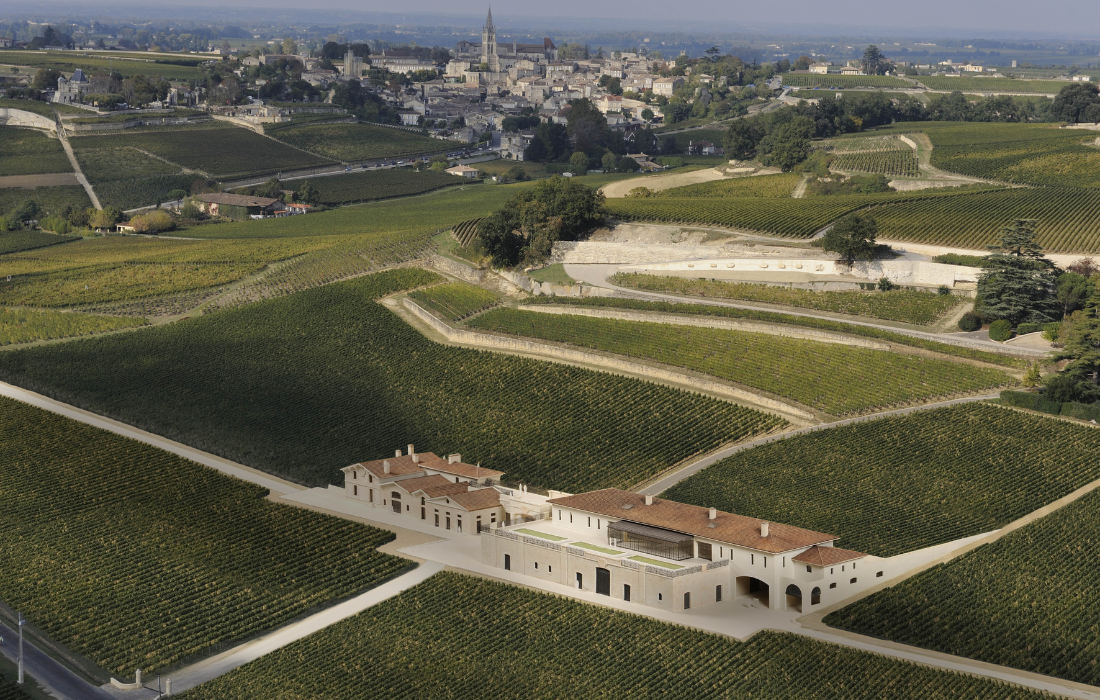
There are few addresses in Bordeaux that carry the weight of Château Pavie. Perched on the limestone plateau and clay-limestone slopes of Saint-Émilion's premier Grand Cru Classé A appellation, Pavie occupies one of the most enviable terroirs on the Right Bank, a fact that its wines make emphatically clear.
Under the ownership of Gérard and Chantal Perse from 1998, the estate became one of the most polarising names in Bordeaux. The wines grew bigger, richer, and more hedonistic, earning ecstatic scores from The Wine Advocate and withering scepticism from others who felt the style had strayed from Saint-Émilion's terroir expression. That debate, simmering for two decades, has quietly shifted. Since passing to the Perse family's stewardship with winemaker Nicolas Thienpont-aligned consultant Stéphane Derenoncourt moving on, and latterly under the direction that produced the 2016 and 2020 vintages, Pavie has found a more nuanced register, still powerful, still unmistakably Pavie, but with greater integration and purpose.
In 2022, Pavie made headlines again, absorbing the neighbouring Pavie-Decesse and Bellevue-Mondotte into its fold following INAO permission, a consolidation that meaningfully expanded the estate's holdings and, as we shall explore, complicates the market picture for the most recent releases.
What follows is a deep dive across twenty-five vintages of Pavie data pulled directly from CultX, examining critic scores from The Wine Advocate and Vinous, current market pricing, performance trajectories, trade history, and the arbitrage opportunities hiding in plain sight.
Let's start with the numbers, because they are extraordinary even by the standards of the top Bordeaux châteaux.
Château Pavie holds five perfect 100-point scores from The Wine Advocate across the 2000-2024 range: the 2000, 2005, 2009, 2010, and 2016 vintages. The 2017 and 2018 receive 99 points. The 2015 and 2020 score 98. The sheer density of near-perfect critical acclaim across a 25-year window is matched by almost nothing on the Right Bank outside of Pétrus.
Vinous, the often-contrarian voice of Neal Martin and Antonio Galloni, paints a more measured but still impressive picture. Martin scores the 2016 at 96 and the 2020 at 97, a wine he recently described as possessing "a lovely touch of shucked oyster shell on the nose that is extremely delineated and focused," calling it a wine of "great length and poise." Galloni gave the 2021 a compelling 96, calling it "a potent, brooding wine," and lavished 96 on the 2023 ("fabulous...rich, dense and explosive...a superb vintage for Pavie"). Antonio Galloni also awarded 97 points to the 2005.
The one notable divergence worth flagging: where the Wine Advocate has routinely given Pavie 99-100 points, Vinous' Neal Martin has historically been more reserved, his score for the 2009 was 95, and he notably remarked it was "not a 100-point wine, not even close." These divergences create pricing inefficiencies that investors should pay close attention to, as discussed below.

The Pavie's 2016 vinatge stands alone as Pavie's current market reference point. A Wine Advocate 100 from Lisa Perrotti-Brown and a Vinous 96 from Neal Martin, the highest combined consensus score in the modern era, frame a wine described as "built like a brick house" with "firm, super ripe, grainy tannins and seamless freshness." With a drinking window from 2021 to 2060, you have nearly four decades of runway.
Market price sits at £197/bottle, with 173 trades recorded on CultX in 2025 alone, exceptional liquidity for a fine wine of this calibre. The 12.76% one-year price increase suggests momentum, though the five-year decline of -19.96% reflects the broader Bordeaux correction. The 2016 is undervalued by approximately 23% relative to its CultX fair value. This is Pavie's most liquid, most critically endorsed, and most compellingly positioned vintage in the current market.
The 2009 Pavie vintage scores 100 from the Wine Advocate and 95 from Vinous (Martin: "not a 100-point wine, not even close, but it is turning into a very fine Saint-Émilion"). Market price is £200/bottle, almost at parity with the 2016 despite a slightly lower Vinous score, and this vintage is the most actively traded in the Pavie cellar, with 214 trades in 2023, 187 in 2024, and 149 in 2025. Undervalued by 22.8% on CultX metrics. The one-year price decline of 16% against a historical positive MAX return (+8%) suggests a market that has oversold relative to quality. Worth watching closely.
The Pavie 2010 vintage also carries WA 100 and a Vinous 94 from Neal Martin, who noted it was "conspicuously deeper in colour than its peers" with "very intense but detailed" aromatics, though cautioned it is "burly and dense" and "missing the finesse" of more recent vintages. The market price is £240/bottle, a meaningful premium over the 2009, despite Vinous scoring it a point lower. The MAX performance of +15.20% and a 27-trade volume in 2024 suggest steady institutional-level demand. Buy now price at £276/bottle is a 14.93% premium to market, the seller community is optimistic here.
The 2005 Pavie vintage holds perfect scores from both major critics: WA 100 and Vinous 97 (Galloni), with a vintage score of 99 making it one of the two highest-rated Saint-Émilion years in the modern era. However, Galloni's 2021 note added a critical caveat: "My preference is to drink the 2005 now, as early signs of aromatic maturity are starting to set in." Translated for investors: the window is narrowing. Market price is £241/bottle, down 14.82% over one year and 17.40% over five years. Trade volume has collapsed from 97 in 2023 to just 16 in 2025. For those holding the 2005, the secondary market signal is clear: the exit window is open, but it won't stay that way much longer.
Pavie's 2000 vintage carries WA 100 and Vinous 96 from Neal Martin, though his tasting note flagged some brettanomyces character from bottle, recovered only in magnum. At £294/bottle, the highest market price in the range, and with absolutely zero trades recorded in 2025 or early 2026 (aside from one £1,838 transaction in mid-March 2026), this is a deeply illiquid market. The five-year performance of -30.60% is the worst in the cellar. For collectors, it's a wine with a 40-year drinking window (2015-2055) that is genuinely drinking well now. But as a tradeable investment? The liquidity risk is very real. The Pavie 2000 has moved into connoisseur territory, those who hold it drink it or frame it.
This is where it gets genuinely interesting for the value-oriented investor.
The 2017 vintage from Pavie carries a 99-point Wine Advocate score from Lisa Perrotti-Brown, who called it "spectacular" and described the wine as loaded with "electric layers of energetic black and blue fruits" backed by "very, very ripe, velvety tannins" with "epic length." Her note specifically celebrated the terroir: "Location, location, location was everything in 2017. Pavie has one of the most enviable locations in all of Bordeaux and boy-oh-boy does it show." The wine's drinking window runs 2024-2069, 45 years of maturation horizon.
The market price? A mere £121/bottle. Down 32.13% from its maximum. Down 19.33% in the past year alone.
This is one of the most striking disconnects in the entire Pavie range. A 99-point wine with a 45-year window, currently in its drinking window, trading at less than two-thirds of the 2016's price, itself a perfect-score wine. The explanation partly lies in the vintage score (2017 was a frost year across Bordeaux, and Pavie's plateau escaped damage when many peers were devastated) and partly in broader market sentiment around 2017 as a vintage tier. But the macro context matters: Pavie's 2017 is not a 2017 in the conventional sense. It is a site-specific outlier, as Perrotti-Brown makes clear. The undervaluation on CultX models is 35%. With 68 trades in 2025, liquidity is respectable.
Pavie's 2018 vintage is similarly under-explored. At 99 WA points ("This could only be Pavie" wrote Perrotti-Brown, praising its "epic length and depth"), with a blend of 60% Merlot, 22% Cabernet Franc and 18% Cabernet Sauvignon, it is a serious, structured wine drinking from 2026 to 2056. The market price is £138/bottle, 10 points less than the 2016 despite the same Wine Advocate acclaim, and the one-year decline of 23.26% has created what CultX models flag as a 34% undervaluation. It's illiquid today (no buy now listing), but with 44 trades in 2025 and a drinking window opening imminently in 2026, patient accumulation on bids makes sense.
The Pavie's 2015 vintage scores 98 from the Wine Advocate and 94 from Vinous. Neal Martin's most recent note (June 2025) is worth quoting for its honest ambivalence: "I have a sneaking suspicion it will come into its own after another ten years." The market hasn't yet rewarded that future potential, at £175/bottle, it's down 4.33% over one year and 19.78% over five. But the 64 trades in 2025 demonstrate continued secondary market engagement, and the drinking window (2029-2050) means there's patience available. With 35% price growth in 2023 and subsequent giveback, there is price memory above current levels. The buy-now premium (+37.62% above market) suggests sellers are anchored to those highs, buyers can take their time on the bid side here.
The 2020 Pavie vintage is perhaps the most exciting proposition in the modern-vintage tranche. WA 98. Vinous 97 from Neal Martin, who tasted it blind at Southwold and called it a wine of "lovely touch of shucked oyster shell" with "great length and poise" and a spicier, more precise character than earlier vintages. Drinking window 2030-2065. Market price: £138/bottle - almost exactly the same as the 2018, despite the higher combined critic score. CultX flags it as undervalued by 21%. With 90 trades in 2025 (the second-most liquid recent vintage), this is a wine the market is actively engaging with, even as prices slide. The -16.17% MAX performance is partly a function of the elevated en primeur entry price. From these levels, with a 35-year window ahead, the risk/reward is compelling for the patient investor.
Pavie's 2019 vintage is an interesting outlier. Both WA and Vinous award 94 points. Neal Martin noted: "In the glass, it begins to show just a bit of alcohol on the finish, prompting me to knock a point off." That note of caution has kept the market measured, at £141/bottle, the CultX model actually flags a slight overvaluation of approximately 9%. However, a buy-now price of £807 (for 6x75cl = £134.50/bottle) is actually below the market price of £141, which is genuinely rare and worth flagging: this is a below-market entry point on a 94-point Right Bank Premier Grand Cru Classé A.
The 2021 Pavie vintage marks the beginning of a style evolution at Pavie. Galloni noted "the move towards more Cabernet in the blend since 2019 has markedly changed the character of Pavie" a structural shift from the historically Merlot-dominant profile. He scored it 96, describing a wine that is "a touch lighter than most recent vintages, but the identity is there." Drinking window 2031-2061. Market price £124/bottle. No Wine Advocate score is showing on CultX, which may be part of the reason the market hasn't fully coalesced there's a single Vinous data point only. Buy-now at £730 is below market (£124/bottle = £745 per 6). With -29.62% over one year, the market has been brutal. But 17% undervaluation on CultX models and Galloni's enthusiasm make this a compelling long-hold.
Pavie's 2022 vintage is a genuinely new chapter: the first vintage incorporating the former Pavie-Decesse and Bellevue-Mondotte. Neal Martin gave it 94 from Vinous, praising the "decadent bouquet" before adding a critical note: "an uncompromising Pavie that perhaps tries a bit too hard." The market price is £255/bottle - the highest of any recent vintage - yet only two trades were recorded in 2025 and last actual trade was at £1,265 (£210/bottle), well below market. The +15.60% MAX performance sounds positive, but that's from an en primeur entry. With almost zero secondary liquidity, the 2022 is currently a blind bid. Treat it as a speculative illiquid hold, not a trading position.
The 2023 Pavie vintage earns a remarkable 96 from Galloni ("fabulous...superb vintage for Pavie"), yet at £202/bottle on the market with zero trades across 2023-2026, it is entirely pre-liquidity. The most recent transaction was £1,392/6-bottle case in July 2024, above current market. This feels like a case that hasn't found its level yet. Long-hold only.
Pavie's 2024 vintage, the youngest vintage listed, carries a 92 normalised score with strong vintage conditions (95) and a price of £136/bottle. No critic scores are yet published on CultX. The CultX model flags a 23% overvaluation at current levels. In the context of the full range, the 2024 lacks the individual score justification to compete with the 2016, 2017, 2018, or 2020 at similar or lower prices. Watch and wait.
Standing back from the vintage-by-vintage picture, the macro pattern is hard to miss: Pavie, like virtually all fine Bordeaux, has undergone a significant correction over the past three to five years. The five-year performance figures tell the story. The 2009 is down 19%. The 2015 is down 20%. The 2017 is down 44%. The 2018 is down 47%. The 2020 is down 38%.
This correction has been driven by four converging forces: the unwinding of pandemic-era buying enthusiasm, the broader rotation of fine wine capital toward Burgundy and Champagne, exchange rate headwinds for non-GBP buyers, and a recalibration of en primeur pricing that significantly overestimated where the secondary market would settle.
However, the correction has created an environment where the highest-rated wines in the cellar, particularly the 2016, 2017, 2018, and 2020, are trading at prices that represent significant discounts to fair value on quality-adjusted models. The 2016's emergence as the strongest performer in the range (+12.76% one year, +20.71% all-time) suggests the market is beginning to distinguish between vintages more rigorously, rewarding the perfect-score 2016 while keeping the 99-point 2017 and 2018 in the bargain bin.
The trade history data adds nuance. The 2009 recorded 149 trades in 2025 - evidence of deep, persistent demand for the highest-quality pre-correction vintages. The 2016 generated 173 trades. These two vintages are functioning as the most liquid stores of value in the Pavie cellar. Everything else is trading at lower velocity, and the newest vintages (2022, 2023) have almost no secondary market at all.
Having worked through the data, let me be direct about where I see the most compelling risk/reward across the range right now.
One thread that runs through all of the critical commentary above deserves direct address. Pavie has always divided opinion. Critics who value precision, classicism, and terroir transparency - Neal Martin being the clearest exemplar - have consistently scored Pavie several points below the Wine Advocate, often questioning whether the fruit ripeness and oak deployment reflects the terroir or obscures it.
What is striking about the 2020 tasting note from Martin - his most enthusiastic in years - is that he specifically praised the oyster shell, the delineation, the "seamlessly integrated" oak, and the "spicier finish." This is not the language he uses for the Pavie of 2010 (which he found "missing the finesse") or 2015 (which he called "Napa-like"). The style shift is real, and the market hasn't yet priced in the convergence between Vinous and Wine Advocate perspectives on the newer vintages.
For the investor, that convergence is meaningful. When the two most influential voices in fine wine move closer to consensus on Pavie, the ceiling for price appreciation rises. The 2020 and 2021 may be the first vintages that carry dual-critic conviction in the modern era.
If I were running a fine wine portfolio and looking at Pavie today, the trade I find most compelling is simple: rotate out of the 2005 and into the 2016 and 2017.
The 2005 is a great wine approaching its aromatic peak, with declining trade volumes confirming the market is beginning to process that reality. The 2016 and 2017 are wines of equal or superior critical standing, with longer windows, better liquidity, and significantly lower prices. The spread between a 100-point 2005 at £241/bottle and a 100-point 2016 at £197/bottle, with the 2016 having a younger, longer window and stronger recent price momentum, represents a textbook mispricing that the market will eventually close.
Pavie has earned its place among the elite of Saint-Émilion through consistency of ambition and the quality of its terroir. The current market dislocation, driven by macro-Bordeaux headwinds rather than any fundamental change in what is in the bottle, has created an environment where some of the finest wines produced at this address in the past quarter century are trading at prices that genuinely warrant attention.
The 2016 and 2017 are the entry points. The 2020 is the speculative conviction call. And the 2005, as beautiful as it is, is a wine to open, not to hold.
All prices and data sourced from CultX as of April 2026. Market prices quoted on a per-bottle equivalent basis at the in-bond, storage price. Past performance is not indicative of future returns.
This article isfor informational purposes only and does not constitute investment advice. Finewine markets are illiquid, and values can fall as well as rise.

Discover Lafite Rothschild 2019: Perfect scores, high liquidity, undervalued with significant appreciation potential — this is a stellar investment. Start trading today with CultX.
Read more ➜
Explore the legacy, craftsmanship, and investment potential of Cristal Champagne, including its historical origins, unique production methods, and cultural significance.
Read more ➜
A Burgundy-based winery that has gained worldwide acclaim for its innovative approach to winemaking and a reputation for producing some of the most sought-after Chardonnays in the region.
Read more ➜