By
CultX Team


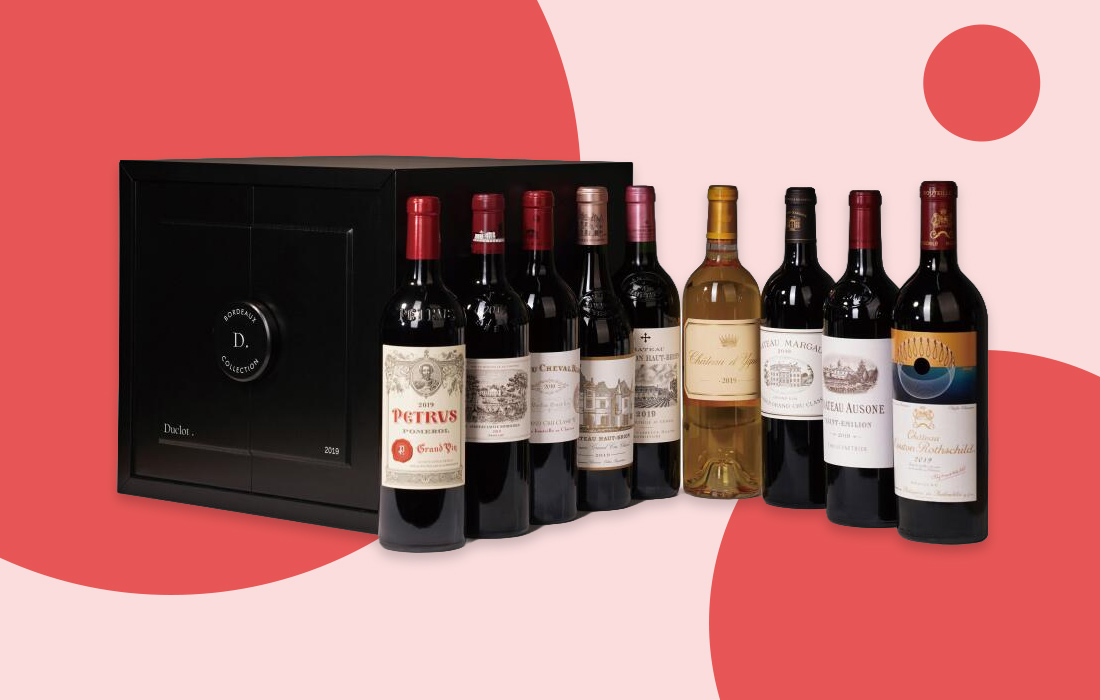
In Bordeaux, an assortment or mixed case is usually a “horizontal” of one vintage. Rather than 12 bottles of a single château, you receive a small number of the very top estates from the same year, packaged together as a single, coherent release.
Duclot’s Collection and Prestige cases are the classic example. The Bordeaux négociant Duclot, founded in 1886 and owned by the Moueix family, specialises in top classified growths and other prestigious estates.
In certain vintages they bottle a nine-bottle case of blue chip names that reads like a roll call of Bordeaux legends.
For the buyer, that format does three things at once:
The cases are produced in limited quantities and usually sold through a small group of merchants, which adds to their rarity.
From a drinking perspective, assortment cases are a shortcut to serious comparative tasting. Instead of hunting down individual bottles from different sources, you can line up the wines in one evening or over several years and really see what a vintage is about.
With a Duclot case you are comparing appellations and styles: the graphite and cassis of Pauillac, the perfume of Margaux, the smoky depth of Pessac Léognan, the richness of Pomerol and Saint Émilion, and, in some years, the sweetness and lift of Sauternes.
Because you hold only one bottle of each wine, you are more likely to reserve them for meaningful occasions. A single case can underpin a series of milestone dinners or tasting flights spaced over decades, rather than disappearing as “just another” full case in the rack.
For investors, assortment cases have three clear attractions.
Instead of backing one château, you spread risk across several of the most sought after names in Bordeaux. All Duclot cases are built on first growths and right bank icons, so you are still focused at the very top of the market, but your exposure is not tied to the fortunes of a single estate.
Duclot cases are released once per vintage, in small numbers, and grow scarcer as collectors open them. They are presented in distinctive wooden or designer cases and later vintages are protected by an authentication system, which reinforces confidence in provenance.
The intact, original case has a story that loose bottles lack, so it can command a premium in the secondary market.
The contents of these cases are routinely assessed by major critics. Wine Advocate and Vinous provide two independent score lines that the market pays close attention to. High or perfect scores from both publications tend to support pricing and liquidity for individual wines; when a whole case is filled with that kind of profile, it becomes an attractive single asset.
A further nuance is the way scores are written. A plus sign (such as 98+) usually signals that the critic believes the wine may merit a higher score with time, while score ranges (such as 94-96) often come from early tastings when the wine is still in barrel. That baked-in potential and uncertainty is part of the appeal for investors willing to think long term.

‘A heatwave vintage captured by the top estates’
The 2003 Duclot case contains one bottle each of:
2003 is remembered as the heatwave vintage in Bordeaux, shaped by extreme summer temperatures that produced very ripe fruit and, in many wines, a more “modern” profile.
The best estates, particularly among the first growths and top right bank names, were able to harness that ripeness while preserving enough structure to age.
This case brings together those successes across both banks in a single snapshot of the year.
Scores and what they tell us
Wine Advocate’s three 100-point scores for Lafite, Latour and Ausone underline how strongly certain estates performed despite the challenging conditions. Vinous is generally more restrained but still confirms Ausone as the standout right bank wine in this set.
For a collector, the spread between the perfect scores and the lower-rated wines allows for strategic drinking. You might choose to open some of the more modestly scored bottles earlier, keeping the 100-point trio for later or for potential resale.
Drinking and investment view
From a drinking perspective, 2003 has always been a talking-point vintage. The wines are often generous, rich and sometimes exotic, especially on the left bank, where the heat pushed Cabernet Sauvignon to unusual ripeness.
Comparing Lafite, Latour and Mouton from the same case highlights those stylistic differences very clearly, while Ausone, Cheval Blanc and Petrus show how leading right bank terroirs coped with the same weather.
From an investment angle, this case is interesting precisely because it comes from a controversial year. The three perfect Wine Advocate scores can underpin value, while the mixed critical reception of 2003 more broadly can create relative value opportunities if reassessments become more favourable with age. The rarity of intact Duclot 2003 cases after two decades in the market is another quiet support for prices.
‘A modern benchmark with remarkably consistent praise’
The 2016 Duclot case contains one bottle each of:
By most accounts, 2016 is one of the great modern Bordeaux vintages. Quality is high across the region, with many wines praised for their combination of ripe fruit, fresh acidity and fine, plentiful tannin.
It is also a sizeable harvest, but at the very top level the focus is firmly on finesse and longevity rather than power alone.
This Duclot case is therefore not just a luxury object, it is a condensed map of the vintage’s finest addresses.
Scores and what they tell us
Here, the consensus between the two publications is striking. Multiple wines reach 99 or 100 points from at least one critic, with Mouton, Haut Brion, Cheval Blanc and Petrus all achieving the top score from Wine Advocate.
The plus signs attached to Haut Brion, Ausone and Petrus in the Vinous score hint at further upward potential as the wines develop in bottle. For an investor, that pattern is about as strong an endorsement of long term quality as you could ask for.
Drinking and investment view
2016 reds are built for the long haul. High, ripe tannins and good acidity suggest decades of development ahead, even though many wines are already surprisingly accessible.
In this case, you have a full spread of left bank first growths, two of Saint Émilion’s most revered estates and Pomerol’s flagship, with d’Yquem providing a sweet counterpoint.
In practical terms, a collector might plan to start opening individual bottles from this case from the late 2020s onwards, keeping others for 2030 and beyond. The sweet wine offers more flexibility, as top Sauternes can be charming young and magnificent with age.
For investors, the 2016 Duclot case offers concentrated exposure to a widely acclaimed vintage at the very top of the quality pyramid. Strong scores from both Wine Advocate and Vinous, together with Duclot’s reputation and the case’s limited production, create a clear narrative that is easy to communicate when the time comes to sell.
‘A young, high scoring release with clear momentum’
The 2019 Duclot Collection (often sold as the Duclot Bordeaux Collection or Prestige Collection) contains one bottle each of:
The 2019 Bordeaux vintage has been described as a “ripe yet fresh” year, with many wines showing generous fruit alongside good balance and energy.
Alcohol levels tend to be slightly lower than 2018, and there is a growing view that 2019 could be one of the standout vintages of the recent trilogy 2018–2020.
This case captures that modern, polished style across all the flagship appellations, including both Haut Brion and its near neighbour La Mission Haut Brion, and again closes the circle with d’Yquem.
Scores and what they tell us
Wine Advocate already awards 100 points to Lafite, Margaux and Cheval Blanc, with Ausone and Mouton close behind.
Vinous often sits just under the top mark but still in firmly “classic” territory, and gives 99+ to Haut Brion, which signals particularly strong enthusiasm.
La Mission Haut Brion appears in a projected Wine Advocate band of 94-96 but enjoys a 98 from Vinous, suggesting significant potential.
For an investor, that combination of early top scores and score ranges is encouraging. As more in-bottle reviews appear over the coming years, there is scope for upward revisions that can support price appreciation.
Drinking and investment view
These wines are still at the start of their journey. Tannins are refined but present, fruit is vivid and concentrated, and the overall feel is of wines that will reward patience.
In practical terms, the 2019 Duclot case is likely to be a long term project, with most bottles best left untouched for at least another decade.
From an investment standpoint, 2019 combines several desirable features: a strong vintage narrative, a high concentration of very elevated scores, and a case format that is still relatively young in the market. For collectors prepared to hold through the early years of secondary trading, this is precisely the sort of structured, high quality exposure that can sit beside older vintages such as 2003 and 2016 to create a neat trio in a cellar or portfolio.
One of the great strengths of Duclot assortment cases is the way they lend themselves to thoughtful drinking plans.
A 2003 case can anchor a tasting on heatwave vintages or a comparison of classic versus atypical Bordeaux styles. The 2016 case is perfect for exploring modern “reference” Bordeaux across both banks with a matching sweet wine. The 2019 case can become a time capsule: opened gradually to watch how a highly regarded young vintage unfolds over the next 20 to 30 years.
Because you hold just one bottle of each wine, you are more likely to place each opening in context, whether that is a vertical of one château, a horizontal of the vintage or a themed dinner built around a particular region or grape.
Having Wine Advocate and Vinous scores at your fingertips helps with both drinking and investment decisions. Higher scoring bottles in a case can be earmarked for longer ageing or potential resale, while slightly lower scoring wines may be prioritised for earlier drinking without any sense of loss.
The plus signs and ranges are particularly useful. A wine carrying 98+ or a 94-96 band has a built-in suggestion that it could climb higher with time or be clarified at a later review. In a Duclot case, those markers, along with drinking windows, can help you decide which bottles to leave undisturbed while you enjoy others.
All of this sits on top of Duclot’s reputation as a historic Bordeaux négociant with deep direct relationships to the leading châteaux and extensive cellars of its own.
The cases are released in original wooden or special designer packaging and, in modern vintages, come with security and authentication features that make tampering difficult and provenance clear.
For collectors, that has two practical implications:
Assortment cases will not replace traditional full cases in every cellar. They make most sense when:
The 2003, 2016 and 2019 Duclot Collection cases each offer a slightly different balance of maturity, style and critical profile. Taken together, they show how thoughtfully assembled assortments can give collectors and investors a powerful way to engage with Bordeaux, not just as individual labels, but as complete, carefully framed snapshots of great vintages.

CultX makes wine investing smarter with tools to track prices, market trends, and valuations. Easily manage your portfolio, explore live data, and stay informed.
Read more ➜
Maximise your wine trading by leveraging our unique tools like live offers, community holdings, order books, and liquidity scores, all designed to connect you with motivated buyers and sellers.
Read more ➜
A guide to investing in the right bottles, knowing when to sell, and finding the investment opportunities in rare wine investing.
Read more ➜