By
CultX Team


Four days, eight appellations, one unmistakable message: 2025 is the real deal.
From the northern Médoc to the Right Bank's sun-baked clay, the week delivered wines of rare consistency: balanced, aromatic, and built with a precision that reflects both a generation of winemaking refinement and, frankly, a little meteorological luck. The late-August rain that appeared across virtually every producer's notes was the vintage's turning point. A hot, dry summer that threatened another extreme and high-alcohol year was quietly resolved by the weather arriving at precisely the right moment. Yields suffered. Quality did not.
Try out our our En Primeur Pricing Tool today on CultX.
Ask anyone on the team to name their wines of the week and the same names come back. Cheval Blanc may well be the wine of the vintage: yields at just 15hl/ha, the lowest in living memory, and alcohol at 12.7%, the lowest since 1979, yet the wine is extraordinary: complex, floral, focused and long.
Château Margaux was equally unforgettable, its late-harvest gamble paying off handsomely with a full-bodied, structured wine whose freshness and intensity are matched by genuine elegance. Pichon Baron delivered serious concentration, down a third on yields, with coffee, cedar and enormous structure held together with precision. Ducru-Beaucaillou was the standout of Saint-Julien, with an early harvest and a palate that managed density and approachability in the same breath.
On the Right Bank, Vieux Château Certan set the tone in Pomerol alongside a remarkable showing from Beau-Séjour Bécot, whose patient, passive winemaking approach has paid spectacular dividends. Figeac and Ausone, the latter producing a Grand Vin-only bottling due to the uniformly exceptional fruit quality, confirmed the Right Bank's distinct floral, layered character. Over in Pessac-Léognan, Haut-Bailly was a clear highlight: what the team called their “Holistique” vintage, and it showed.
What struck us most was not just quality, but intent. Across both banks, producers have clearly decided, together, if not quite consciously, that 2025 Bordeaux should be a different kind of wine.
Gentler extraction. Lower new oak percentages. Earlier picking. Alcohols consistently sitting between 13% and 13.8%, a welcome contrast to the power of recent warm years. The message from château after château: these wines should be enjoyable young, without sacrificing the depth that cellaring rewards.
Several estates skipped second wines entirely, Cheval Blanc, Ausone, because the quality of fruit was too uniformly excellent to exclude anything. That is both a remarkable statement of vintage quality and a reminder of just how little wine will ultimately be available.
Which brings us to the only question that really matters as the releases approach.
The quality is there. The critics will almost certainly confirm it, and when they do, the temptation for châteaux to price aggressively will be considerable. They should resist it.
Bordeaux’s EP campaign has been on fragile ground. Sales in the 2024 campaign were down around 60% versus 2023. Buyers, merchant and consumer alike, have spent several years watching EP purchases underperform against back vintages available on the secondary market. Trust has eroded, and it will not be rebuilt in a single vintage, however good.
The estates that priced with discipline in 2024 earned loyalty. The ones that didn’t lost buyers they may not recover. 2025 offers a genuine opportunity to reset that relationship, but only if the pricing reflects the reality that buyers have alternatives.
The 2020s, the 2018s, the 2016s, these are wines of exceptional quality, still available, and still offering real value. A well-priced 2025 needs to make a compelling case against them on a per-bottle basis, not simply demand a premium on the back of critical scores.
Volumes are tight, yes, at some estates dramatically so. But scarcity is only a lever if buyers want to pull it. Right now, they need to be convinced.
2025 is everything Bordeaux needed it to be: a cohesive, high-quality, distinctly characterful vintage with wines across both banks that are genuinely exciting, from first growths down to third wines and entry-level bottles that punched above their weight all week. The second wines in particular, Réserve de la Comtesse, Clos du Marquis, Carillon d’Angélus, La Croix de Beaucaillou, represent a quality tier that has rarely looked this strong.
The vintage has earned its moment. Now it needs the price tags to match.
As the campaign unfolds, timing and pricing will matter more than ever. With the CultX En Primeur Pricing Tool, you can follow the Bordeaux 2025 releases as they happen, tracking opening prices, critic scores, and how each wine positions itself against both recent vintages and the wider market. Built to give you a clear, data-led view of the campaign, it allows you to assess value in real time, compare releases, and make informed decisions as the market takes shape.
Access is available via the app, where you can explore the full dataset and stay ahead of the campaign as it evolves. CultX account required, create your free account today.

Your guide to the risks and rewards of purchasing wine from producers like Petrus, Château Mouton Rothschild and Louis Jadot before it’s bottled.
Read more ➜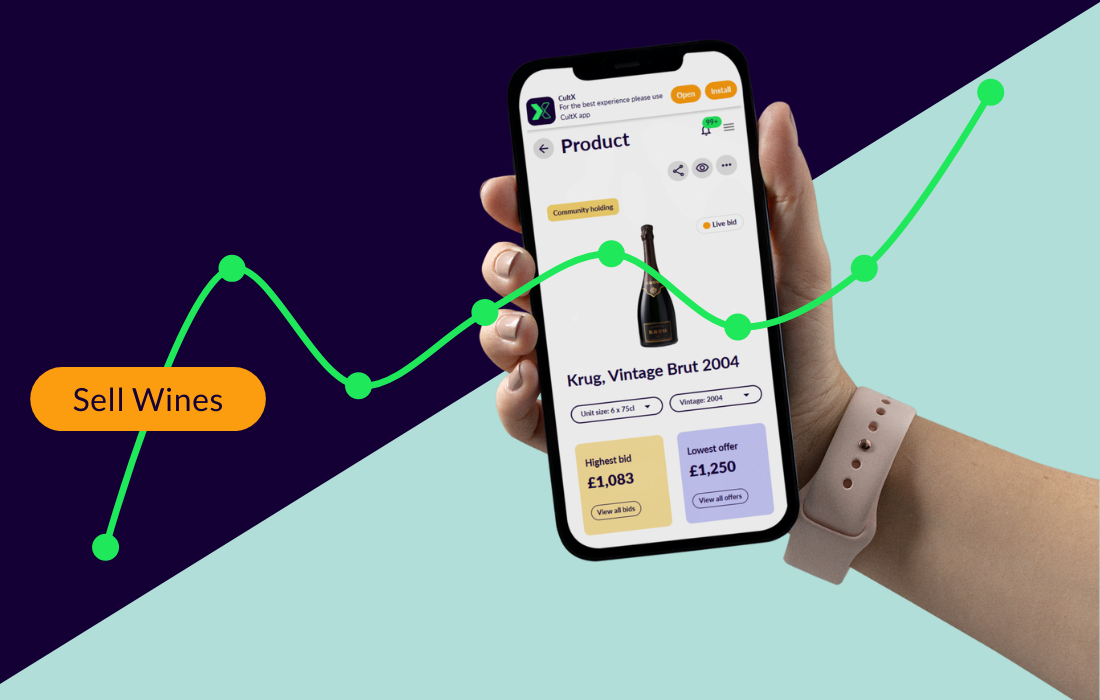
With lower prices, renewed demand and improving market signals, 2026 is shaping up to be a standout year for collectors and investors.
Read more ➜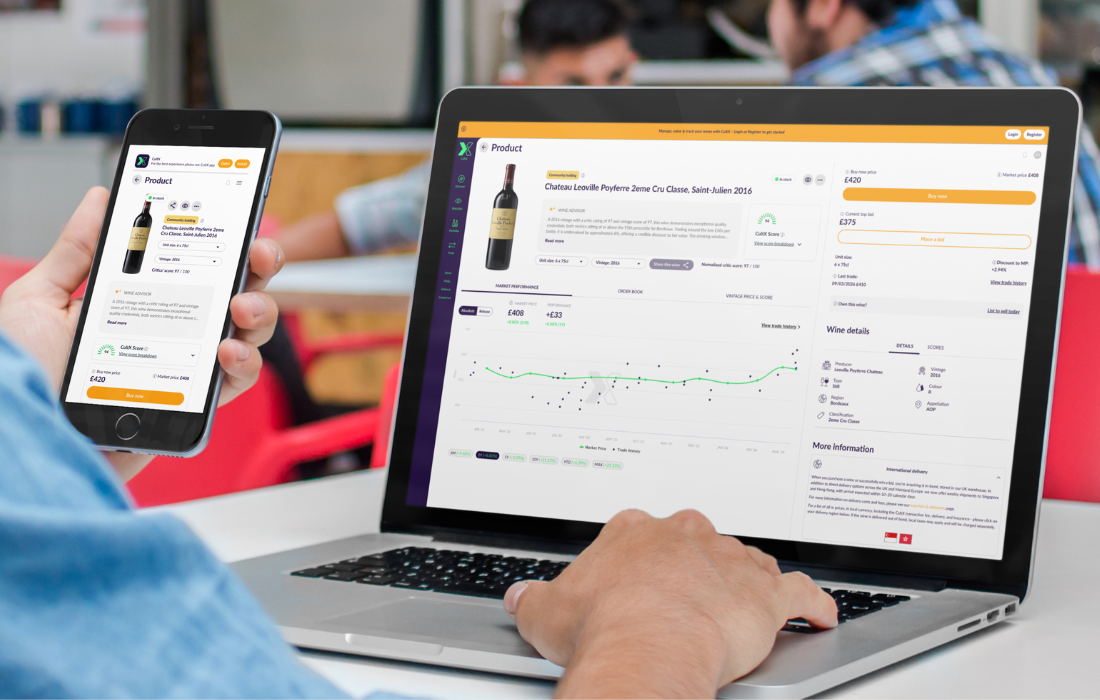
Verified marketplace data from CultX shows strengthening liquidity, rising bid competition and improving trading velocity as the fine wine market moves into a new phase of price stabilisation.
Read more ➜